Turning fixed orthodontic retention from a manual craft
Into a clinical standard.

Up to 50% of orthodontic patients relapse due to failing retention.

Our proprietary E2E platform eliminates uncertainty from the retention phase by standardising every step, from design to placement.

Retention becomes a predictable, reproducible, et donc and therefore lasting act.

Our 3 technology pillars

Artificial Intelligence

Optimal physiological design computed by our practitioner-validated proprietary AI .

Robotics

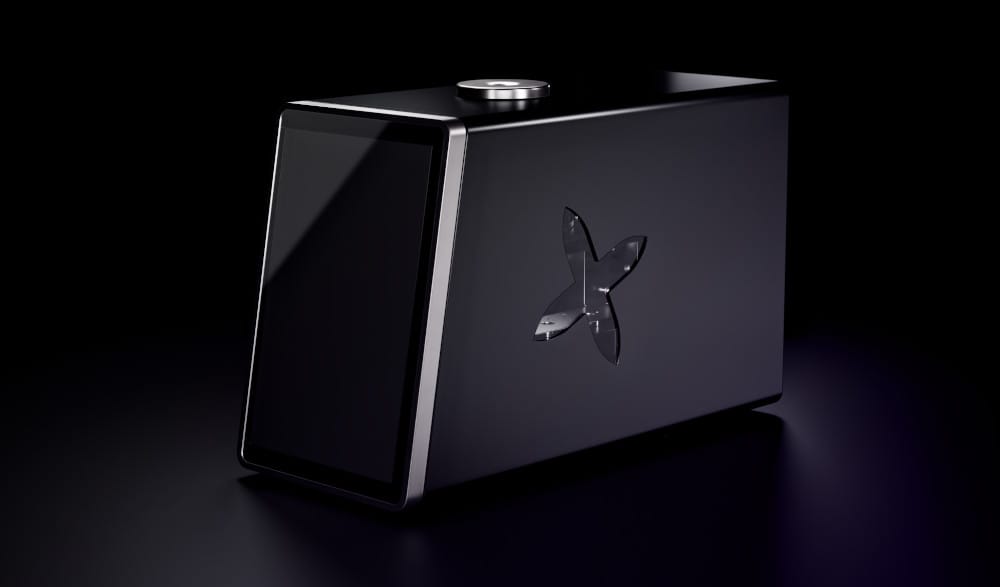
2nd-order passive bendingnd with 100μm accuracy by our patented robot NovaBend™.

In development

Augmented Reality

Clinical act assistance through our proprietary registration algorithms displaying clinical data directly in the practitioner's field of view.

Our mission since 2020

Improving the therapeutic outcomes of orthodontic treatments through technology

30k

SMILES PRESERVED

250+

PARTNER PRACTICES

1M€

INVESTED BY CLINICIANS

+30%

EXPENSES IN R&D

Retention: the missing link of modern orthodontics

Orthodontic retention is the final step, aimed at stabilising teeth after treatment. It is therefore the stage that guarantees the outcome of the treatment.

Yet manufacturing a lasting retainer is of unsuspected complexity : holding without constraining, resisting without stiffening, and fitting perfectly to the tooth surface.

When the retention phase fails to prevent relapse, every stakeholder in the treatment is affected.

For the orthodontist: an emergency appointment that disrupts their schedule, and potentially a treatment to restart. traitement à reprendre.

For the patient: years of treatment, effort and sacrifice potentially undone.

For the healthcare system and insurers: potentially a double cost, with up to 50% of treated adolescents resuming treatment as adults..

This problem was never inevitable. It was simply waiting for committed engineers.

Our answer: an E2E full-stack platform

Retention is complex at every stage: designing the ideal appliance, manufacturing it with precision, and bonding it in the right position.

WinnoveMED has therefore developed an end-to-end chain dedicated to fixed orthodontic retention.

Our proprietary clinical design AI analyses the patient's intraoral scan and designs the optimal retainer by combining the mechanical constraints of the material, the patient's dental morphology, and the practitioner's prescription.

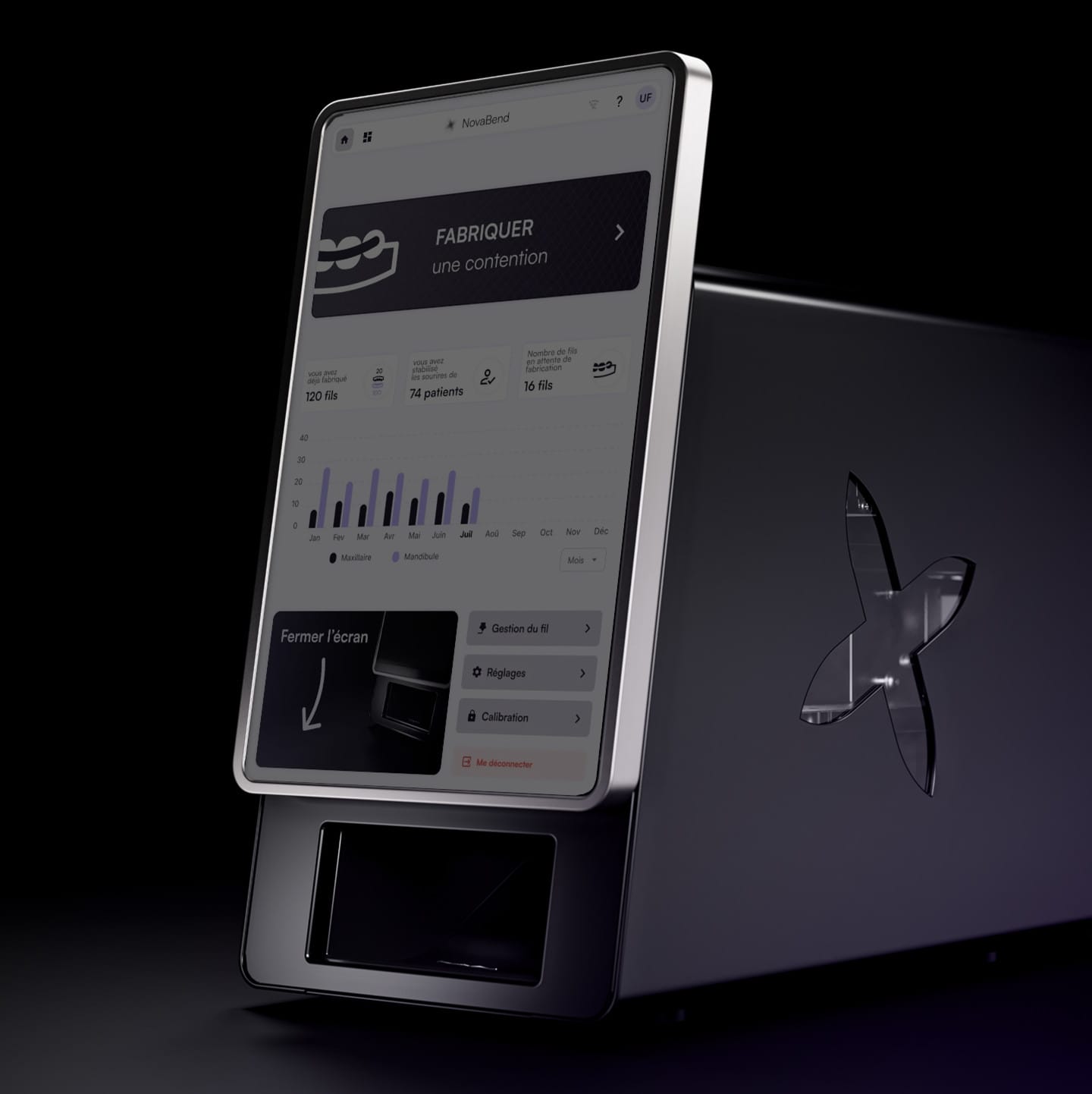
NovaBend™, our proprietary bending robot, bends according to this design with sub-millimetre precision in under 90 seconds. Our patented 2nd-order bending technologynd ordre covers every clinical case and guarantees a passive wire at every fabrication.

Our augmented reality placement assistance, powered by our proprietary real-time registration algorithms, will overlay clinical data directly in the practitioner's field of view.

This problem did not call for a tool. It called for a platform.

Retainers validated by science and practitioners

Studies conducted with leading orthodontic university hospitals, collaborations with research laboratories, and practitioners who validate and use our retainers on a daily basis.

A structurally growing market

In 2026, 17M patients will start orthodontic treatment worldwide, up 8% from 2025. This market growth, driven by the rise of adult orthodontics, is compounded by the higher clinical demands of adult patients regarding the retention phase, which favours fixed orthodontic retention.

NEW PATIENTS / YEAR (2026E)

500k

FRANCE

6,6M

EUROPE

17M

WORLD

Two models, one platform

Some practices prefer to produce their retainers in-house, others prefer to delegate. In both cases, clinical quality is identical because the production tools are the same. Only the manufacturing location changes..

On-demand service

The practice scans and prescribes.
WinnoveMED designs, manufactures and delivers.

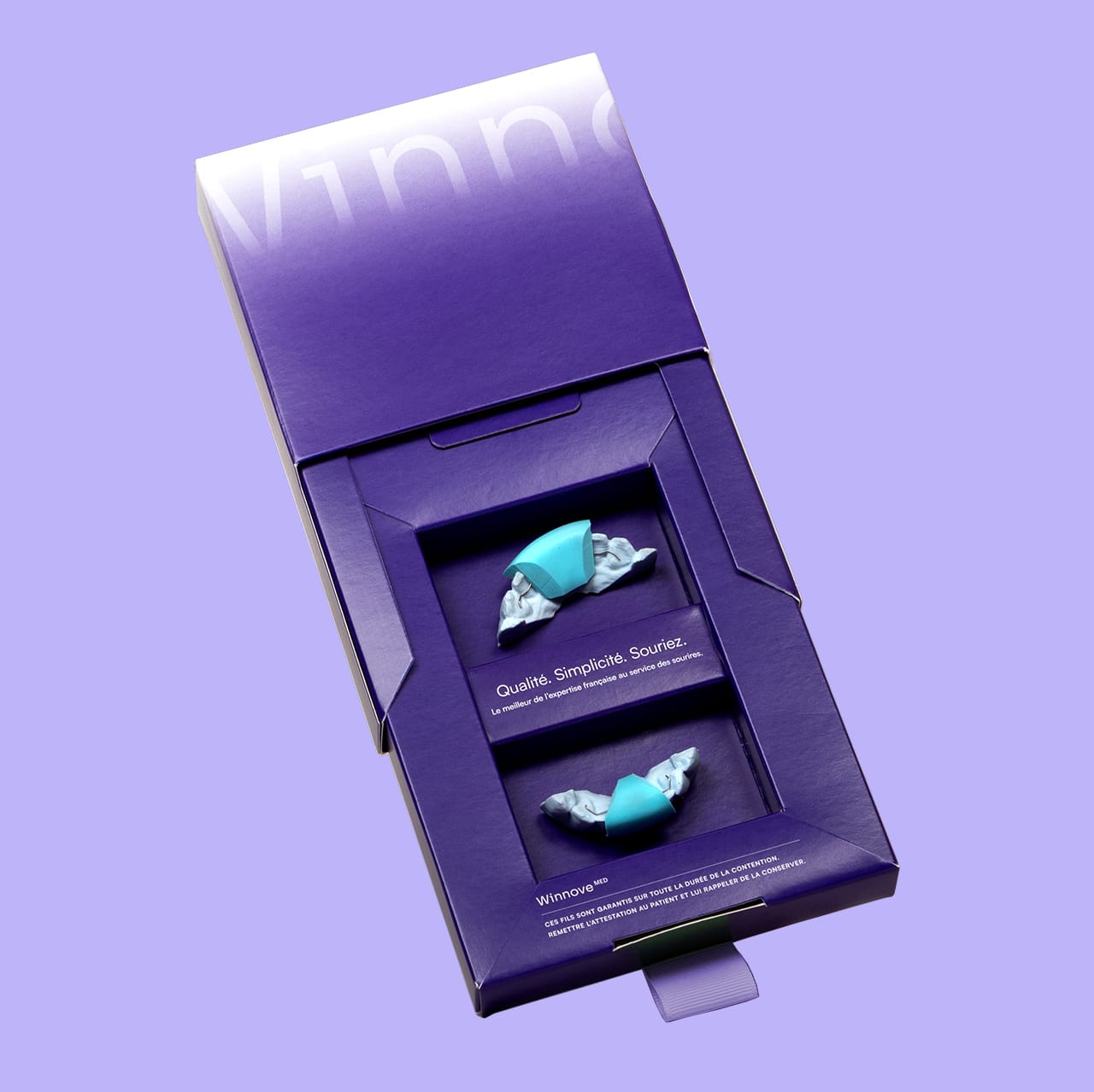
Boîtier violet contenant deux contentions orthodontiques Winnove MED, présenté dans un emballage en carton

NovaBend™ in-practice

The practice acquires a NovaBend™.

It manufactures independently on-site.

Engineering expertise, clinical purpose

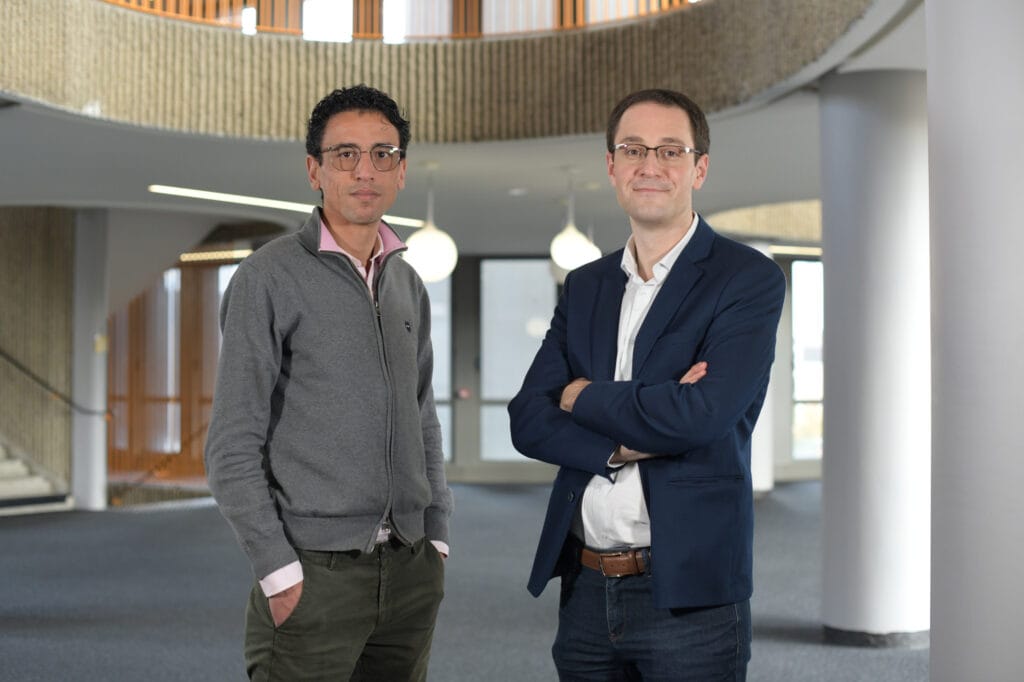
Firas, a mechanical orthodontics PhD and inventor behind the NovaBend™ patent, and Damien, a seasoned engineer and operator, have brought together clinical and technological expertise with the execution capability to tackle the fixed orthodontic retention problem.

Firas HARRABI
CTO

  • PhD in Mechanical Orthodontics
  • Former R&D Lead, Medical Devices
  • NovaBend™ Patent Author
  • SFODF Member
  • Contributing Editor, l'Orthodontiste

Damien CHARALABIDIS
CEO

  • Digital Modelling Engineer
  • Law Degree
  • Former Service Centre Manager
  • Former R&D Manager
  • Former Offer Manager

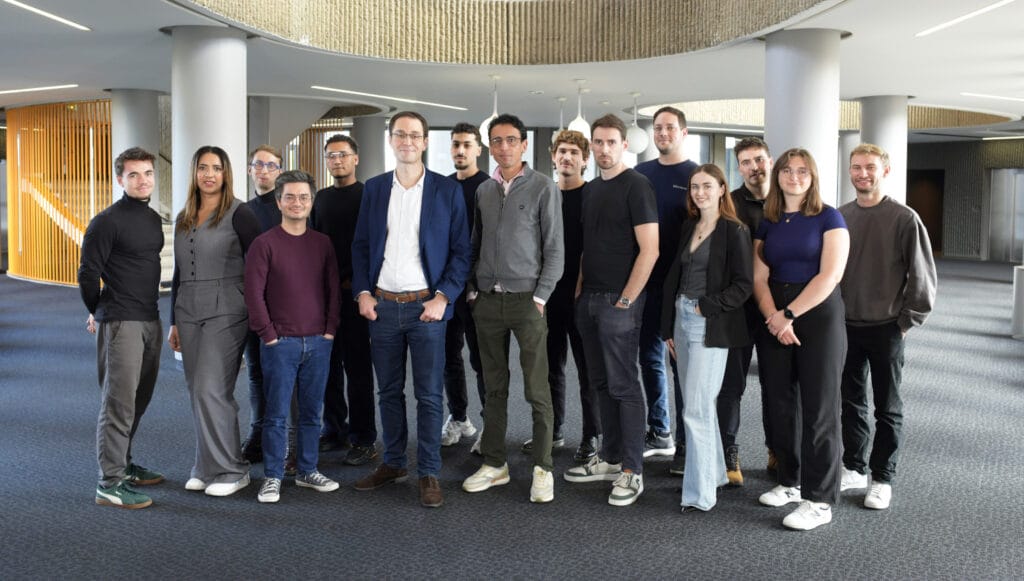
Alongside them, a team dedicated to improving orthodontic treatments. orthodontiques.

They believe in our mission

Logo Crédit Agricole blanc
Logo CIC blanc
Logo Région Bretagne blanc
Logo French Tech Le Poool blanc
Logo BPI France blanc

FAQ

A fixed orthodontic retainer is a custom-made medical device bonded to the inner surface of the teeth (lingual side) at the end of orthodontic treatment. It is typically applied to the front teeth (anterior segment), most commonly from canine to canine, on both the lower (mandibular) and upper (maxillary) arches.

Its purpose is to hold the teeth in their new position while they stabilise, as teeth naturally tend to shift in the months following the end of active treatment.

Active orthodontic treatment moves the teeth but does not immediately stabilise the surrounding tissues (particularly the ligaments), which need time to reorganise around the new tooth positions.

Without retention, teeth may gradually drift back towards their original position, partially or fully. This is known as relapse.

Retention is therefore the stage that safeguards the long-term outcome of months or years of active treatment.

A fixed retainer is typically a thin wire bonded to the inner surface (lingual side) of the front teeth. The key advantage is that the patient benefits from continuous, long-term retention without having to think about it.

A removable retainer is a clear plastic splint that the patient must wear regularly, typically at least overnight. It retains all teeth (both anterior and posterior segments) but requires significant long-term compliance.

The two can be combined: the fixed wire handles day-to-day retention of the anterior segment, while the removable aligner retains the posterior segment overnight and also serves as a periodic check — if it no longer fits, it is likely a sign that relapse is under way.

Orthodontic relapse is a multifactorial phenomenon with several often concurrent causes:

1- Removable retainer wear can be insufficient (clinical compliance), as the appliance is worn irregularly or abandoned altogether, and therefore no longer fulfils its retention function.

2- Upper arch (maxillary) fixed retention has until recently been difficult to achieve in complex cases, particularly where significant overlap exists between upper and lower teeth (deep bite), due to the lack of suitable technical solutions. These teeth were therefore not adequately retained. Addressing such complex cases is one of the defining features of the patented 3D bending technology (2nd-order) developed by WinnoveMED.

3- Teeth are constantly under load, particularly during chewing (physiological movement), and therefore exert continuous pressure on the retainer. As a result, a retainer that is not sufficiently durable and/or poorly adapted to the patient's morphology may gradually fail.

Additionally, treatments carried out during adolescence generally target occlusal correction, primarily focusing on the posterior teeth for optimal physiological stability. In adult orthodontics, patient expectations are sometimes more aesthetic in nature, which may require retreatment — as the aesthetic outcome achieved during adolescent treatment does not necessarily meet the expectations of the adult patient years later.

WinnoveMED is a French medtech startup founded in 2020 in Rennes by Firas Harrabi, a mechanical engineer and PhD in mechanical orthodontics and member of the Société Française d'Orthopédie Dento-Faciale, and Damien Charalabidis, a digital modelling engineer and seasoned manager.

The team, made up predominantly of engineers, has developed the first complete design and manufacturing platform for custom fixed orthodontic retainers, in partnership with numerous orthodontists and French university hospitals. It combines a clinical AI iForm™, a patented bending robot NovaBend™, and augmented reality placement assistance.

Behind WinnoveMED stand BPI France, the Région Bretagne, French Tech Rennes Saint-Malo, the CIC and Crédit Agricole — all of whom believed in our mission and have supported us from the very beginning.

The WinnoveMED platform is built on three proprietary technology components.

1- The iForm™ clinical design AI analyses the patient's intraoral scan and designs the optimal retainer profile by combining the mechanical constraints of the material, the patient's dental morphology, and the practitioner's prescription.

2- The patented NovaBend™ bending robot bends a 400μm diameter retainer wire with 100μm precision in 3D (2nd-order), whilst guaranteeing its passivity.

3- Our augmented reality algorithms overlay clinical data onto the patient model to validate wire positioning prior to placement. This technology is currently used internally within our quality control process and is being developed for direct practitioner assistance at the chairside.

Current fixed retention solutions fall into three categories: chairside manual bending by the practitioner, craft manufacturing by a dental technician, and automated bending solutions.

WinnoveMED stands apart through full ownership of the technology stack, from intraoral scan analysis via its clinical AI iForm™ to wire bending via its NovaBend™ robot — the only solution on the market capable of 3D (2nd-order) bending, covering all clinical cases including the most complex, such as maxillary deep bite.

A orthodontic retainer is a custom medical device (CMD) prescribed and fitted exclusively by a qualified healthcare professional — an orthodontist or dental surgeon.

It is the practitioner who determines the most appropriate type of retention for each patient's clinical situation.

With over 250 partner practices across France, your orthodontist is very likely already offering WinnoveMEDsolutions and will recommend them if clinically appropriate.

WinnoveMED retainers are custom medical devices (CMD).

As such, pricing is not publicly disclosed, in accordance with the regulations governing communication on medical devices.

For any pricing enquiry, please contact your practitioner directly. If you are an orthodontist, you may submit a quote request to our team at 02 44 84 86 44 or by email at sales@winnovemed.com.

Scroll to Top